If You Want To Understand Your Mind, Sit Down and Observe It

115My mind and I talk.

I say to my mind “Be quiet, I can’t hear what is really happening.”

My mind replies “I’m not the one talking, you are”.

Did I just say that or was it my mind?

“Oh be quiet, focus”, I tell myself. “My breath. Breathe. Focus.” I eventually settle into my meditation practice and find a harmonious experience where my mind quiets and I am simply observing it, without any attachment or aversion to the impermanent nature of things. Over time, I observe the very root of any potential suffering and allow it to arise and pass.

I sit, I contemplate, I observe. My mind, my mental cognition, my thoughts, my ego, and my dreams take over my awareness. I am aware as it is happening and therefore, I am observing. I re-direct my awareness to the sensations that are arising, present, and passing in my body. I feel sleepy, I notice it, I sit up. I observe the experience of sleepiness. My mind always has something to say about what I see and feel and hear. Again, I am observing and aware that my mind never ceases to share its opinion, assessment, evaluation of what simply is.

Observing the mind objectively is not an easy practice. On the one hand, there is a necessary awareness of the distinction between the Self and the Mind. We have many expressions in our English language that speak to this confused identification we have with our minds. “I don’t feel like myself today”. “It’s not like me to have done something like that”. “I can’t hear myself talk”. “I keep telling myself to stop, but I can’t”. “I am trying to discipline myself to change this or that habit”. Everyone experiences this. So, the first step in developing an understanding of the mind if to distinguish it from who You are. You are not your mind. You are separate.

And yet, You are your mind. Once an awareness of the distinction is present and once you have a true experience of the You that exists as separate from the mind, the practice becomes about experiencing a sense of integration without identification. Integration means a union, a yoking, a joining. As you observe your mind’s tendencies, as you separate yourself from its agitations and fluctuations, it eventually quiets. It’s in the quiet spaces that You can observe that You and your mind are one and the same. Observe your mind in the same way you would look through the surface of the water to see what exists in the depths of a lake. When the water is calm; when sediments and particles settle; when the water is pure and clear and you aren’t creating waves or disturbances, you can see what exists at the bottom. It’s in those moments of clarity that things begin to shift. We can let go, see what is, and distinguish between what is actually happening in reality and what we interpret is happening in reality.

To me, that is yoga. The practice through your physical postures encompasses the same process of observation. The only difference is you are moving through sensations as opposed to sitting.

In his book “Mindfulness: a Practical Guide to Awakening”, Joseph Goldstein puts it simply: “If you want to understand your mind, sit down and observe it”. Or – move and observe it until your body feels comfortable enough to sit without distraction. Either way, find at least some moments to observe the mind without movement to allow for things to arise and notice what the mind’s tendencies are in how it reacts to the sensations in the body. Sit without movement. And simply observe.

Be mindful, be free of the conditioning of your mind, and be happy.


Intimate Reflections on Suicide

images-of-robin-williamsI work with teenagers who are deeply committed to an idea of ending their lives. I talk about suicide on a daily basis and explore what it means to those who are contemplating it.

With the recent loss of Robin Williams, I have been following the various responses in the media and reactions expressed through social media. The way each person deals with the loss of someone to suicide is so individual and yet, we all share commonalities in the way death has us reflect on life.

Our shared loss is a testament to our interconnectedness and I am offering my reflections on suicide from a deep place of understanding. When a public figure completes suicide, the related topics of mental health, addictions, and systemic issues of care, come to the forefront. These topics are certainly worth discussing and I have been so intrigued by the various perspectives on mental health that have been recently shared publicly. Some react with anger, others with compasssion, others with sadness and deep sense of honour for a life worthy of celebrating and being grateful for. Humour is known to be a very powerful method of healing. It’s also a coping strategy for many. It isn’t surprising to me that one of our most legendary comedian actors demonstrated his depth of suffering by choosing to end his life. He, like all of us, had different parts to his Self: some were public parts, some were private, some were unknown, and some were likely blind even to himself.

Suicide is a solution to the problems that people encounter and it’s the solution they think is most viable when they feel like they have hit road blocks along their journey with any of the alternatives. I say they, but I can actually say we, I, me. I am truly and deeply interconnected with my clients. The times in my life when I have experienced a desire to simply die have been the moments when I have lost all sense of that interconnectedness and have felt so separate from the world that I have dissociated from my Self. The capital Self: the part of our Self that is without suffering, that is connected, at peace, and egoless. One who chooses suicide is often accused by others for being selfish. It is a selfish act, but not in the accusatory and judgmental way that people often talk about selfishness. It is selfish in the very same way that one who experiences deep depression is so disconnected and lonely that the idea of thinking of others beside themselves is overwhelming. During periods of suffering, we live in our heads rather than in our bodies and hearts. Emotional suffering exists in the mind. In fact, some who choose suicide see themselves as such a burden to others. Their sense of compassion toward others is so profound that they can’t bear the thoughts of how negatively their existence causes pain for others. The problem is often a lack of self-compassion and a disconnection from themselves – disconnection from the place inside their hearts from which they can offer love to themselves. We could get into topics of emotional trauma and addictions here as well, but I will try to bring my reflections back to a very succinct way of describing emotional suffering and my view on healing from contemplations of suicide. My views are obviously influenced by some of my teachers and so, I would like to offer what I have recently learned from the following professionals:

– Michael Stone: At a training I attended, Michael said “mindfulness is intimacy”. And I related that to what I know about the fact that you can’t be mindful and caught in a dramatic story of victimization, villain-hood, or heroism at the same time. Suffering exists in story. Mindfulness brings us to the present moment, in intimate relationship with ourselves, others, and our environment. When explored well, developing a state of mindfulness means developing connection as a skill, a state of being, and it requires the capacity to trust that we are capable and worthy of intimately connecting. Connecting creates suffering for those who don’t believe they are worthy of love or who fear rejection so greatly that love equals pain. Thank you Michael for bringing the concept of intimacy into my reflections on mindfulness. Intimacy is extremely scary for many, but the cost of living out of fear is very high. Mindfulness, in other words, is intimacy training.

– Dr. Bessel Van Kolk and Dana Moore: Trauma is about disconnection – disconnection at the levels of interpersonal, intrapersonal, and inter-nature. When one experiences events in their lives that have been emotionally traumatic, their nervous system gets locked in a state of hyper or hypo-arousal. In other words, the nervous system is almost constantly in a state of fight, flight, or freeze. Mind-body approaches are a necessary component to trauma treatment because trauma really does exists on a psycho-physiological level. What is known to work in the field of trauma treatment are approaches that enable the person to ground themselves in their bodies and step out of the suffering of the mind. Retraining the nervous system and being able to call on skill in moments of disconnection takes a lot of work, and unfortunately, many don’t pull themselves out of trauma.

– Buddhist teachers, Vipassana meditation and my yoga teachers: I owe these lessons to the many who have contributed to my understanding of the nature of suffering. What we know from the philosophies of Buddhism and yoga are the following: suffering stems from a state of ignorance about the law of nature and the interconnectedness of life. Ignorance, again not meant in any judgmental way. Ignorance being a misapprehension/ misinterpretation of reality that is filtered by our ego – our sense of i-ness as separate from other. The ego then can fuel states of aversion and attachment. Aversion to the states and emotions that we label as unpleasant and attachment to the internal states that we label as pleasant. Our internal states are influenced by the external stimuli and we often think we have aversion or attachment to these external things, but when you take a deep look inside, it becomes evident that it is in fact to the internal sensations, thoughts, and emotional states that we are averse or attached to. How does this relate to suicide? One who contemplates suicide often experiences aversion and attachment in such extremes that the connection to one’s Self is clouded by tremendous misapprehension of simply “what is” because “what is” is not seen as such. “What is”, an objective view on reality, is viewed subjectively, and the suffering related to suicide becomes interlinked with a deep confusion about one’s meaning and purpose on this earth and one’s capability of living a happy and meaningful life.

– My clients: the kids/ teens I work with are my greatest teachers. I see the various parts of themselves every day. I see them smile, I see them scream, I see them cry, kick, hurt themselves, and I see them hide. I see them expose their vulnerabilities and I watch the responses of others. I see them test themselves and others. Each and every time I experience any kind of emotion in my relationships with them, I am getting to know myself. My reactions show up when I am mirrored in something they are living. My connection knows no bounds when I allow myself to be and feel connected. I experience the pain and sorrow of their suicidal ideation when I permit myself to go to that place with them, listen deeply, be non-reactive, and ask the hard questions about alternatives… all the while honouring that suicide is always a possible solution.

Suicide is always a possible solution. Now, let’s explore what other solutions we have. This is my message about suicide and I thank Dr. Bessel van Kolk for putting it into words. The alternative solutions to suicide don’t exist in our mainstream medical system. They don’t exist in most mental health treatment programs, and they don’t exist in a [pharmaceutical approach to care. The solutions are wrapped in our relationships with ourselves, others, and nature. The solutions require a lot of courage, but that doesn’t mean that those who have passed by suicide lacked any kind of courage.

Dear Robin:

May you be happy, may you be peaceful, and may you connect with your Self in a way that you were unable to in this life. Thank you for the greatness of the gifts you shared with us through your talent, vulnerability, and through the laughter you created.

My heart also goes to all of you who have lost a loved one to suicide.

I continue to work closely with and learn from people who are creating a paradigm shift in our mental health systems of care.



Mindfulness and Emotional Balance – The Chicken and The Egg

Blog_Chicken_or_EggThere is an on-going dialogue within the yoga, Buddhist, and mindfulness communities, promoting yoga and mindfulness practices as a means of achieving greater emotional balance. By emotional balance, we are essentially referring to the development of emotional regulation skills: an ability to create a state of peace in the mind as various emotional states arise and pass within the body – moment-by-moment-by-moment. There is indeed constant change occurring. And when we can observe the emotions as exactly what they are – impermanent – without attaching any story to the experience, the emotions do subside, change, evolve. Overtime, default patterns of the way in which we react to our emotions start to shift.

There is no linear process, however, in learning how to apply mindfulness to our own ability of creating emotional balance. In order to observe the moment-to-moment changes, one does have to be in state of being where the internal dialogue of the mind is quiet enough to observe the physiological existence of our emotions. Emotions exist on a physiological basis. There are thoughts associated with and that may trigger certain emotional states, but what we label as anger, sadness, joy, are nothing more than sensations in the body. Little subatomic particles and biochemical reactions occurring within the body and affecting the nervous system’s ability to respond to reality as it is happening. With a peaceful, quiet and observing mind, emotional sensations don’t last for more than 5 minutes. When the mind craves or has an aversion to the sensations, however, and attaches a whole story to the emotion, the sensations persist, grow, and become more engrained in the physiology of the body. One gets stuck in the belief that the emotion is permanent.

I can only teach and provide counselling for people from what I know in my own life experiences. And what I know from my own experience is that mindfulness is a skill that is developed through practice. What I am sharing is that it takes a certain level of emotional balance to engage in the practice and the practice does in fact assist us in learning to balance the ebbs and flows of our emotions.

So, what comes first: Mindfulness skills or emotional balance? Not one nor the other. If one wishes to apply the skills of mindfulness and yoga in their lives off the mat or the meditation cushion, the practice must occur when the mind is calm. With a daily practice and in times when the mind is balanced, we slowly develop that skill of observation and the skill then becomes something we can learn to carry into those moments when we feel out of balance. I have witnessed in my self and others an expectation that if mindfulness is understood intellectually, you can call on your knowledge when the emotions are running the show. When, in fact, our intellect serves us nothing.

Practice quieting the internal dialogue and paying attention to what is happening in a moment-to-moment experience of your being in times when the experience of your being is at peace. Practice regularly, through each of your daily activities. As your experiential understanding of the sensations associated with each emotion deepens, your ability to regulate your reactions to those experiences will become easier and easier over time.

If it usually takes you 3 days to work through a state of anger, the practice may help you reduce that to 2 days, then 1 day, then 4 hours, than 2 hours. Eventually, as you learn to understand that the emotional experience is in fact always impermanent in its very nature, the practice may just take you to a place where the suffering of the mind disappears.

My love for the practice comes from a deep place of care for the happiness and harmony of all.


Same Stroke for Different Folks: Reflections on Vipassana Meditation

meditatingVipassana means to see things as they really are. The meditation technique is one of India’s most ancient forms of meditation.

During meal times over the 10 day course, I would look around the room and contemplate the universality of what we, the 65 women who were there together, were simultaneously experiencing. I would also imagine the inner workings of the mind’s of the 65 men who sat in the adjacent room, eating in silence, separated from us women and within a context of their own gender norms.

There was the girl who would eat three bananas, squish them with her fork, cover them in molasses and sugar and devour her concoction within three minutes and 5 breaths.

There was the Russian lady who always wore long dresses and uttered a silent prayer with her hands hovering over her food at every meal time, blessing the food that was given to her and not paying attention to the agreement we all made to not recite mantras or any form of prayer during the 10 day course.

There were the identical twins (who I hadn’t even noticed until day 5) who sat across from each other, did not engage in eye contact or speech, but would have an implicit form of intuitive communication which was evident by the simple fact that when one got up for tea or a helping of seconds, she would bring back the same for her sister.

There was the lady who couldn’t resist non-verbal communication – when there were no knives left, for instance, instead of going to the washing bins and taking a washed knife, she would come to a table and sign language with someone asking if she can use their knife. She then would signal thank you by drawing her hands to her chest in prayer position and bowing. She also did this anytime you would open a door for her. It was hard to resist the acknowledgement of her thank you given the expectation of no communication among co-meditators whatsoever.

There was the pregnant woman who left after day 2. There was the other pregnant woman who made it through. The one who made it through would walk to a window after meal time – a window that looked onto the men’s dining hall and wave to her partner who would have also planned to “meet” her there to say hi each day.

There was the girl who would eat some of her meals with fork in one hand and chop sticks in the other and alternate between the right handed fork and left handed chop sticks as she drew big heaps of food into her mouth. She also wore the same shirt every day of the course.

There were women ranging from approximately 17 or 18 years old all the way to women in their 70s and 80s. We were women representing every social class, various cultural backgrounds and religions, and the differences and similarities in our activities and interests was simply non-visible but very imaginable. There were the women I wanted to connect with and the ones I was simply intrigued by.

Yet, we were all there together, sharing this experience and examining the universal truths related to our human lives, our patterns of aversion and craving, and observing ourselves and others with a learned sense of objectivity. We were all there with the common purpose of learning the Vipassana technique.

There’s the expression “different strokes for different folks”. I love experiences like the Vipassana course where you get to share a common experience with people whom you likely wouldn’t otherwise ever meet. Mastering the human mind and techniques such as this engage different folks in learning a same and universal stroke.

I have never felt lighter than I did on that drive home.

One of the kids at work yesterday asked me “can we meditate?” to which I replied “of course we can. How about right now?”. He said “now?”. Yes, now. All three teenagers in the room eagerly sat up straight and followed the instructions without an word of resistance to the idea of learning how to understand and control their own minds.

Much love to you all.


Prevention of Compassion Fatigue for Yoga Teachers

sb-compassion-fatigue-1In most health care and social service professions, there is the named experience and notion of compassion fatigue: the tiredness and burnout that sets in when one exhausts his/her limitations of what he/she can give to another without ensuring a balanced output of compassion and care for the self. Prevention of this compassion fatigue is important for all helping professionals, parents, caregivers, and teachers/educators. As a yoga teacher, if you aren’t mindful of your own practice of yoga, self-compassion and self-nourishment, your Tadasana (mountain pose) may end up looking like a rounded lumpy bag of potatoes and your mind may end up getting cluttered, compounding the very obstacles that are getting in the way of your ability to truly be present, loving, and kind.

As I observe my own patterns and listen to the challenges experienced by many yoga teachers, I notice how the very obstacles that stand in the way of us humans cultivating a state of Yoga (stillness of the agitations of the mind) show up in many of our teaching styles, studio cultures, as well as in the way we respond/our ability to truly listen to the challenges that students are requesting support for.

According to The Yoga Sutra of Patanjali, the 9 obstacles that interrupt mental clarity and the cultivation of continued growth are: illness, inertia/ depression, doubt/ self-doubt, impatience/ haste, laziness, greed/ overindulgence, delusion/ arrogance, lack of perseverance, and regression/ difficulty sustaining effort through challenges.

Our human minds do what they do best. Our minds will attach, experience aversion, let the ego get in the way, fear, and ignore objective reality.

Our best tool to preventing compassion fatigue is yoga: both the practice yoga and the practice of letting go/ relinquishing control, paired with the ability to discriminate between reality and what we interpret from our reality.

Someone reminded me the other day that a yogi is a yogi 24 hours per day. Part of the practice of preventing compassion fatigue involves:

– Being happy for someone who is happy (Love/ Happiness: Maitri – Sukham)

– Having compassion for others who are suffering ( Compassion: Karuna – Dukham)

– Rejoycing in another’s good deed (Joy: Mudita – Punya)

– Seeing someone’s inappropriate actions for what they are: just a part of the whole (Equanimity: Upeksa – Apunga)

When the above named obstacles get in the way of practicing love, compassion, joy, and equanimity, we always have the practice and our inner wisdom to come back to. When we practice what we preach, our life and our teachings become so much more impactful for ourselves and others.

Namaste

Top Take-Aways From 2013

026With 2014 upon us, I would like to thank my mentors and teachers for the lessons that have stuck with me from 2013.

In this moment, as I write, these are the top quotes/anecdotes/stories I have to share:

1. Just because you are experienced in something, don’t assume you are above and beyond the proposed cautions – accidents often happen when the ego interjects and awareness gets left behind. After laughing at the signs in the picture above, I snapped my ski pole in two by letting it dangle from my wrist and getting it caught on the platform at mid-station. I now ski with two mismatched poles because the lift attendant kindly gave me a pole that was left behind by someone else who ignored the cautions. We traded, actually – He took the two broken pieces in exchange for a pole that was intact. I didn’t ask if anyone had been choked by their loose scarf… I just choose to embrace my mismatched poles and trust the signs.

2. “The highest form of human intelligence is the ability to observe without judgment” ~ Saraswathi Vasudevan during a lecture weekend at Yoga Therapy Toronto’s studio.

3. “Pranayama (breathing techniques) are the only way to dissolve anger” ~ Prem Bakshi, one of the mentors whose presence in my life I will forever be grateful for.

4. “Through this experience, you will learn to protect yourself as you listen to and respect your own boundaries better” ~ my clinical supervisor.

5. My best friend asking me to be her maid of honour. I always knew I would one day play that role in her life, but the experience of being asked and invited into someone’s process of committing to a life of shared love with someone else is one that I don’t take for granted.

6. Age, love, and wisdom: there is a relationship between the three that became evident to me at my dad’s wedding in September. Committed, authentic, true romantic love requires wisdom. Wisdom just happens to (usually) come with age.

7. On the financial front: People who live modestly, within their means, without debt, and prioritize spending on the necessities balanced with what nourishes them, have all inspired me to reflect on our relationship with money and the impact it has on our wellness.

8. I love getting mail! One of my old tree planting buddies sent me a Holiday postcard. It was the only personalized mail I have received since his last year’s postcard. This time, he kindly used a picture of the two of us circa 2008 as the postcard itself. August Edward, from Thompson, Manitoba, thank you! The picture is on my fridge.This reminded me of the importance of connecting with the people we think about in ways that show that we care.

9. Anchorman 2 – the number of quotable quotes would require a blog post on their own.

10. Example of funny times: If you are sitting at a dinner table and are experiencing tension in the conversation, confidently change the topic by sharing that you have the ability to imitate an owl’s cry… and proceed to demonstrate. “You guys needed me at that dinner last night!” ~ Andre.

11. “Saying goodbye and parting ways with someone is sometimes the most compassionate thing you can do for yourself and the other” ~ A Buddhist Monk who led a meditation on transforming resentment into compassion. I attended the meditation in 2008 or 2009, but her words resonated most for me in 2013 as I explored what that actually meant in practice.

12. We live in a beautiful country.  With my mother’s persistence, we visited the last province I had left to visit in Canada. That trip to Newfoundland, a couple weeks out west, and photos shared by friends who traveled internationally, inspired an intention to explore more.

13. With a new found state of presence and attention to things that matter, I enjoyed time with and the company of my family more than ever before. Dear family (I include life-long friends), I love love love you.

14. Mountains, trees, oceans: you have taught me the balance between Sthira and Sukha (stability and ease) and given me a point of reference when trying to grasp the experience of that balance.

15. Treasuring the beauty of vulnerability: the people in my work and in my life who have shown the willingness of being vulnerable in their openness with me have taught me things about myself. 2013 babies who have been welcomed into this world within my social circle have taught me the same (Arlo, Wren, Naomé, Oliver, Benoit).

With much love and gratitude, Happy 2014!

Katherine

He Sent the Globe Into a State of Self-Examination

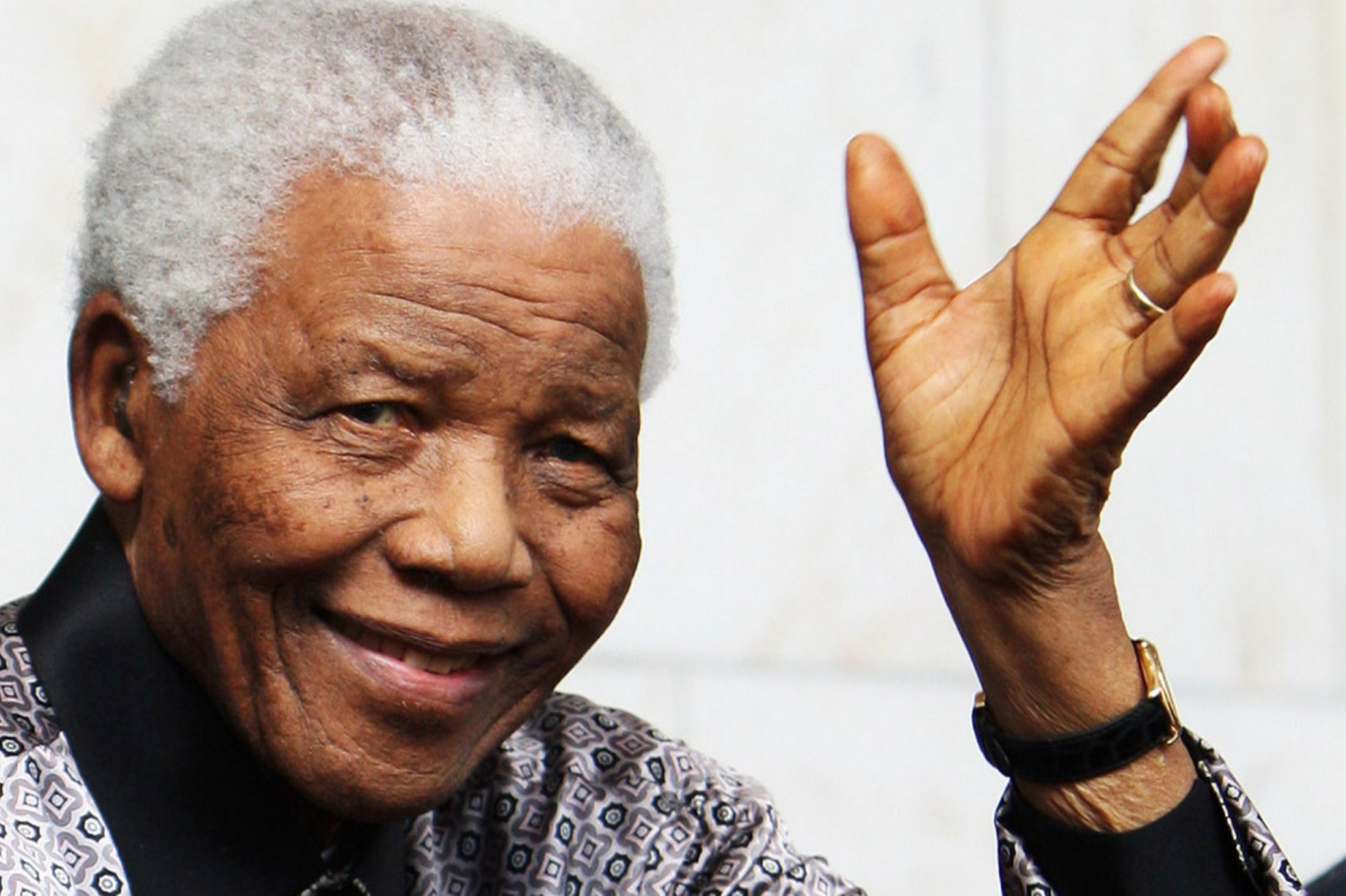
NelsonMandelaNelson Mandela: a man whose life left everyone pondering, wondering, being grateful, and asking ourselves the simple question of how do we continue to live up to those principles that he so powerfully stood for. When such an influential leader passes on from the existence that we know, the impermanence of life becomes real. Within minutes of the news, people were stopping and examining their own lives. The integrity of his speech and his actions changed this world. He embodies the kind, compassionate, loving human characteristics that exist within each one of us. How do we know that his character is one that represents us all? Because people of every demographic can relate. Because it’s people like Nelson Mandela that understood what it really meant to tap into the universality of what has us connect, contribute, and shine in the light of the adversities we face. It’s people like Nelson Mandela that remind us that even the very people who cause us suffering are worth forgiving, treating with non-violence, and sticking to what we believe in so that we can bring greater connection and change to this world. The forgiveness and non-violence isn’t about the other person, it’s about our own sense of freedom and clarity in practicing what we preach and experiencing the benefits of it through a sense of empowerment.

I have made reference before to the following quote by Alfred Adler. “It is easier to fight for one’s principles than to live up to them”. There is a reason that it is easier to fight for one’s principles than to live up to them. It’s easier because fighting comes from a place of ego, familiarity, victimization and power-based concepts. Standing up for what you believe in and being willing to suffer the consequences of sticking to your words requires faith in yourself, in others, and in the knowing that this world is a safe place in which we can live, love, and be who we truly are. It’s hard to have your speech and your actions match. Yet, we all know intellectually that we and this world would be better off with a little more integrity on all of our behalves.

Students fight teachers over having to attend an unwarranted detention and by doing so, they lose the power of their voices. Parents fight against their children’s healthy questioning by imposing their opinions through punishment and by doing so, they lose the opportunity of simply modeling the very respect for which they are arguing. Politicians, prison guards, school administrators, corporate managers, employees, civil servants, house mates, siblings, entertainers, refugees, citizens, spiritual leaders,… we all play various roles in this world. Our identities, our roles, and the way we interact in the environments in which we live is a direct reflection of how we perceive ourselves to have the freedom of being who we are and having our voices heard. Our systems are systems of power and influence. I am not sure that many of us would have been willing to stay true to our words through 27 years of imprisonment. Not because we wouldn’t have wanted to, but because that would have been one of the most difficult of unjust circumstances for the human mind to stay true to a perspective of courage, optimism, and belief in the possibility of equality and freedom.

Here is to celebrating and being thankful for the impact of Nelson Mandela’s life and the sacrifices he endured while being true to what we all are capable of: integrity, wisdom, and true kindness toward ourselves and others.

Never Underestimate the Power of Accomplishment

001Yesterday, my brother and I ran the Toronto Waterfront Half Marathon. With very little training, each of us set off in the morning with a flexible goal. I began the run with an idealistic ambition of keeping up with the 1h45 pace bunny. Within 3 kms, I quickly adjusted that goal as I thought to myself “what the hell am I thinking? I am not trained to keep this pace for another 18 kms!”. So, I dropped back a bit and set a new goal of finishing under 2 hours. I kept my adjusted pace, enjoyed the run and came through the finish line at 1h56. I wasn’t trained for a new personal-best half marathon time, but I was in shape enough to feel good about having done the run. My brother finished 24 minutes ahead of me with a time of 1h32. I am so proud of him.

For those of you that run, or do any kind of long distance endurance sport, you would understand what I mean when I say that a lot goes through your head while you are out there pushing yourself to just keep going. I thought of a lot of things, including: what life would be like if I lived in Toronto, what I was going to do about the stain on my white shirt, how I was going to be able to put together a fundraising event for my work, and whether or not I should sign up for a Spring Half marathon to beat the slower-than-desired pace I was running at in that very moment of self-dialogue.

What also occurred to me was how amazingly lucky all of us running that race were to simply have an experience of accomplishment that day. Approximately 27,000 people ran in that event. Spectators were lined up along every accessible sideline possible. And everyone was there to say “don’t give up”, “keep going! There is a cold beer waiting for you!”, and “who needs those toenails anyway?”.

More so, what occurred to me is that not everyone gets to experience that power of accomplishment. When I was doing counselling with an 18 year old girl last year, I learned a very important lesson of gratitude. She was court mandated to see me for 6 sessions. With a few bumps in the road, she attended and fully participated in all 6 hour-long therapy sessions. At the end of it, in our last session, tears came to her eyes as we were wrapping up. I, in my psychoanalysis of the situation, figured it was a representation of her abandonment struggles and her attachment to people. In my wrong perspective, I thought she was crying cause she was sad to say goodbye to me.

She corrected me. She said to me “I am crying cause this is the first time in my life that I have ever achieved anything meaningful”.

I had never thought about it that way. In the end, it doesn’t even matter what we talked about in our sessions. I encouraged her to keep challenging herself in life to keep creating opportunities to experience that sense of self-pride and joy.

Her therapy sessions were my half marathon.

Tragedy and our degrees of separation

5765-vector-silhouettes-of-men-and-women-a-variety-of-professional-material-1It’s often in the face of a tragic event, such as the train and bus collision in Ottawa last week, that we pause and reflect on our lives and the interconnectedness of our existence.

Ottawa is small and I estimate that most of its residence are within three degrees of separation of one another.

It was important to me, as a mental health and social justice advocate, to take a moment to write about this and to encourage everyone to continue to send positive thoughts to the friends and family members of those who were affected by last week’s tragedy… and any other tragedy in which lives simply end sooner than anyone expects while leaving their loved ones in grief.

On 9/11, it was also World suicide Prevention Day. I attended a lecture at the Royal Ottawa Mental Health Centre. I learned that most countries in the world continue to classify suicide as a criminal act and, therefore, incarcerate people who attempt suicide and ban any public talks or events aimed at creating awareness about any topics related to suicide. In Canada, suicide was decriminalized in 1972. We can now work toward better preventing it and support those who are courageous enough to name it.

Whether it be by accidental tragedy, intentional suicide, or the taking of one life by another, certain events seem to always have us take a moment and wonder “what if that had been me?”. Our degrees of separation can be a source of support and strength. Or, should I say, our degrees of proximity and close-relationship to one another are.

The Executive Director at my work place said it best: Hug your family members a little tighter tonight and take a moment to appreciate what you have.

Don’t tell me to calm down!

angerAnger gets a bad rap.

It’s actually not all bad. Ask some of the teens I work with to list the up sides of anger and they will look at you with a puzzled expression as though you are crazy to even suggest that such benefits exist. The only benefit that they sometimes come up with is “when I rage, it’s a release”. That release then creates the problems though.

When I get angry, I go into this weird internal dialogue as I battle with myself to suppress it, hide it, fight it, pretend it’s not there, and turn the blame toward myself. Anger produces guilt as though being angry = I am a bad person. Why? because I am one who struggles with fully embracing the up sides of anger – the messages that anger often gives. I even find myself apologizing for my anger, before I have even expressed that anger is in fact what I am feeling. Problem is, the truth always comes out. It’s bizarre and yet, I see that pattern in a lot of different people. Maybe raging is healthier? The ragers wouldn’t say so. What is healthy and constructive?

Messages that the actual emotion of anger communicates to us include: our boundaries have been crossed, we are giving more than we are comfortable giving, our needs are not being met, our emotional safety has been compromised, we are not communicating a truth about something, someone is cramping our growth, and we are avoiding dealing with an important issue in our lives.

So… a healthy expression of anger is as simple as being in tune with the message that those intense rage feelings are communicating, listening to it, and doing something about it to honor what you are actually experiencing and the impact it’s having on your well-being? Right – so simple. We first need to develop the skill of being really honest with ourselves and in tune with our bodies – Not so simple.

Gabor Mate, M.D. and author, shared his perspective at a lecture I attended. He talked about how one of three things often occurs. 1) A healthy experience and expression of anger would involve a situation where a person is angry if and only when an actual threat is present (threat being one of the messages listed above). When the threat is gone, as a result of having done something about honouring our needs, the emotion itself dissipates as well. 2) The problem is, we all have baggage. Some more than others perceive a threat and get angry about it when it’s not actually there. For example, assuming someone is taking advantage of us when they aren’t. Or, jumping to conclusions based on projecting our past history onto current circumstances. In cases like these, the work that is to be done involves sorting through that baggage, letting go of past hurts, checking in with reality, and changing our patterns of response whenever that perception of threat starts to emerge. 3) Resentment – When we make ourselves sick by hanging on to the emotion of anger long after the threat has been removed. We resent, punish, hold grudges, and poison ourselves only to gain this sense of righteousness about how we’ve been wronged.

Conclusion: The healthiest form of anger is only experienced in the actual presence of a real emotional threat. The threat is gone – so is the anger.

In any kind of mindfulness-based approach to emotional regulation, the task at hand involves simply allowing the emotion of anger to just be there without reacting to it or acting on the thoughts that surface; to just experience the bodily sensations fully and completely to become aware of the message it’s communicating. Then, taking appropriate actions to change the situation. Eventually, the anger dissipates. It can’t last on its own. Nothing ever does. The experience only persists when we get attached to the mental cognition – the story – that the bodily sensations represent and ignore what that emotional experience is actually trying to communicate.

As long as no one says “just calm down!”.