The Distinction Between Power and Respect

008When people use the word respect, what they are often actually referring to is power and not respect at all, in the true sense of the word.

Bear with me as I elaborate on this notion.

The distinction between the language of power and respect is something I became aware of a few years ago after a lecture given by a police officer in Vancouver named Mike Knox. Knox goes into more depth about this notion in his book “Gangsta in The House”, indicating the misuse of the word respect as a norm in gang-related culture. I now lead discussions around this topic with the groups of teens I work with. They typically have a ton to say about it and understand the distinction and the paradox in our use of language quite quickly.

I will take you through the same conversation I facilitate in my work.

What is the difference between Power and Respect? With the teens, I write the two words at the top of two separate columns and we brainstorm ideas related to each.

POWER                                         RESPECT

Dominance                                    Trust

over/under                                    Equality

can be used well or not                 Honesty

Often involves fear                         You like the other person

Intimidation                                    You want to listen

Can be official or not                      Can be powerful

What it always inevitably comes down to is that the distinction is pretty simple: Power can be used in helpful or harmful ways; power and respect are not mutually exclusive; with power, one can be respectful; people in a position of power over others tend to exert the use of domination, intimidation, and creation of fear to get what they want rather than communicating genuine and mutual respect; the impact of using power in a dominance kind of way is that people tend to abide and listen to you out of fear, not at all out of respect for you. The teens are pretty quick to realize that when we mistaken our power for respect, it’s easy to live an illusion that people like you, when in fact. it might be that they have no respect for you at all and are too afraid to say it because of how you might use your power to impose consequences.

So, then we look at some of the common language that gets thrown around in relationships where there is a real and explicit hierarchy (parent-child, teacher-student, employer-employee, police officer-civilian, bullier-bullied, etc.). We say things like “you better show me some respect”, “if you don’t respect me, I’m going to…”, “don’t you dare disrespect me”, “you owe me respect”, “people have to earn their respect”, “no one disrespects me”, and so on.

In those statements, are we really talking about respect or are we covering up the fact that what we are really talking about is power? It seems pretty obvious to me. That misuse of the word respect is at the foreground of some of the fucked up power struggles that inevitably lead to high stress, conflict, punishment, and ego-driven realities in our hierarchical systems.

I obviously encourage the teens to look at their own use of language rather than to simply think of examples of times when they have been on the receiving end of the exertion of power. The question is, how do you respond to someone who is trying to dominate you, expecting you to respect them in return…

I like coming back to the quote I have blogged about before “It is easier to fight for one’s principles than to live up to them”. As soon as we start to puff up our chests and fight for the “respect” we think we deserve, our ego is getting tangled up in the power game. The way to invite respect into our lives is by being respectful. It’s that simple.


Mountains, Gratitude, and Stories of Resiliency.

057When I tell people what I do for a living, I often get responses along the lines of: “I don’t know how you do the work you do”, “wow, that must be so hard”, and “good for you, I would never be able to do that kind of work”.

Like anyone, I sometimes get lost in confusion. And ,of course, the stories that I hear from some of my clients are beyond heartbreaking. The thing is, contrarily to what some people might think, my job isn’t to disconnect from the difficult emotions that some of the stories I hear may trigger. My job entails connecting with and hearing the resiliency that lies behind those stories, and to allow myself to fully experience that connection in a supportive and caring way – to go beyond the heartbreak that I may interpret and relate to and draw out the strengths I see.

Bobby is an 18 year old who immigrated to Canada from South America. I worked with him after he was discharged from the hospital following a cocaine overdose. His father was murdered when he was 5. By that age, he had already witnessed extreme domestic abuse. His family fled his native country two years ago because his step-father was wanted through messy drug-related debt.

Janessa is 14. She has scarred her body beyond repair. With two parents sentenced to a life of mental illness and drug addiction, she is being assessed for mental illness herself. Suicide attempts, sexual abuse, emotional abuse, confusing religious messages, bulimia, bisexuality, abandonment, and self-hatred are the dominant themes in her story.

Kerry is 16 and doesn’t know where she is from. She only knows she came to Canada from South Africa when she was 5.  She has lost every family member except her father and brother and she has a sense of humour that can turn a whole room into smiles. She learned to be good at making jokes quickly after blocking out the tragedies she wishes to not speak of.

Whenever I feel disconnected, I turn to the mountains for the power and wisdom that they carry. Being immersed in the immensity and beauty of high peaks and deep valleys reminds me of the following:

I have never experienced war, genocide, or any kind of traumatic tragedy.

I have not been a witness to murder, suicide, or torture.

I have not experienced the fate of violence against women, genital mutilation, racism, extreme poverty, hunger, or disease.

I have not been beaten or abused by the people who are meant to care for me.

Some of my close ancestors have experienced  the above and fortunately, by the time life got to me,

I am loved.

I am educated.

I am healthy.

…and I have more opportunities than many of the people who live beyond the mountains that I climb could ever possibly imagine.

As mental health professionals, we are privileged to stories of resiliency that are a gift to hold.

I only wish I could take some of the youth I work with up into the high landscapes and have them connect with themselves in a way that talk therapy could never provide.


The Beauty that Hides Behind Self-Harming Behaviours

self-harmThe beauty is the pure, amazing vulnerability that defines our very humanity. That vulnerability only has harming effects when one tries to escape it and run away from the sense of being open and exposed to the world. The harming effects come from the self-sabotaging attempts of desperately proving that one is not the beautiful and loveable person that he or she truly is. The self-sabotaging behaviours also serve in keeping people at a distance, to avoid the potential pain of rejection and the fear of actually experiencing true joy and connection.

I am currently working with a group of six teenage girls. Four of the six are cutters, one is battling with severe drug addictions, and the other opened up last week about her eating disorder. What’s the difference? There is none. Cutting, eating disorders, addictions, gambling, depression, anxiety… The girls and I are starting to talk about what it is that makes us all one and the same. People just have different ways of experiencing their vulnerability and dealing with those moments of panic and fear. The way we each experience it and deal with it has everything to do with things that have happened to us in the past when we have felt helpless and vulnerable. Are you someone who has been shown that the world is a safe place and that everything will turn out ok? Or are you someone who has been slapped in the face, humiliated, abused, and put down every time you tried and allowed yourself to believe?

Every animal has these weird and obscure ways of puffing themselves up and intimidating potential predators. Certain species of birds puff up their feathers, spread their wings and squawk. Cats round their backs. Porcupines, Skunks, Jelly Fish, Snapping Turtles, Poisonous Snakes… For many, there is a defense mechanism built into their biological make-up to ensure their survival. Humans are not much different. Our defense mechanisms exist within our emotional reactions, psychology, and nervous system. We fight, blame, justify, accuse, scare, intimidate, hide, deny, and more. For some of us, those defense mechanisms work. Over time, we are taught by those that we love to let down our guards and let go of the perception of threats in moments when the threat isn’t actually there. For others, the defense mechanisms haven’t served them well in times when they were most important. Some have learned that there is no way of protecting oneself and the only way to get through the pain and sense of helplessness is to cause self-harm before someone else inflicts the pain… at least that way, you’re the one in control.

If you wish to have a better understanding of what it is that motivates one to cause self-injury, become curious about their story and what vulnerability has felt like to them. If you wish to take a stand for what people are actually worth, connect with them on a human level and look beyond the behaviours that are meant to mask the beauty that may be so hard for them to embrace.

Join me in taking a stand for those who have been abused, bullied, and taught to think that they are not worthy of being loved.

The Mighty Pythons and The Meaning of Life

Last night, I had a very interesting and intellectually stimulating conversation with someone that involved a lot of debates about concepts in theology, religion, politics, psychology, philosophy, and more. It was the kind of conversation that left me thinking a lot about the truth-seeking nature of human behaviour. What is the truth about life? Is there a truth? Whose truth is true or is anything true at all? Here’s a little something I wrote last year for work and it always stimulates pretty interesting conversations with the youth I work with. It’s my version of deep thoughts and really, it’s just psychology 101. I think I actually prefer the Mighty Pythons message about the meaning of life.

Life starts with basic needs.

Like food,

affection,

nurturance,

and safety.

Then, things happen.

We live experiences.

We receive information.

The world and everyone around us, sends us messages.

About what we should be, do, feel, and think.

We form evaluations of all this incoming information.

We develop our own perceptions,

perspectives,

and interpretations.

From our experiences, we create and add meaning to things that simply happened.

We make judgements,

form opinions,

as we develop a set of beliefs

and morals.

We make sense of everything by placing the information in categories:

Good/ bad

Right/ wrong

Pretty/ ugly

As time progresses,

we develop insecurities.

These categories force us into boxes.

If we don’t feel that we fit in the boxes, we freak out.

Stress takes over.

Fear begins to limit us.

And not to mention shame.

We get easily consumed with worries that didn’t used to exist.

Sensitivities have us react in ways we don’t even understand.

And it all relates to a kind of self-consciousness that wasn’t there before.

We now have expectations of ourselves and others

because our needs have become complicated.

And the worst part is that all of these complications,

somehow lead to consequences.

Such as conflicts,

loss of control,

hurt feelings,

sense of failure,

frustration,

and discouragement.

What did we do to deserve this?

Life is now unfair.

If, on top of all of this, we let our ego get in the way,

it will seek protection from whatever it perceives to be a threat.

The ego values being right

and making others wrong.

So all of a sudden, we are spending our energy saving face

and making sure we look good,

instead of fostering the nurturance, safety, and love that seemed so simple.

We want to avoid rejection,

which equals pain.

But, we’ve already learned at this point, that life is hard.

Life takes work.

School,

family,

friends,

making decisions,

“Succeed”,

“Be happy”,

“Be good”,

“Help others”,

“Do right”.

“Control your emotions”,

“Express your emotions”,

“Be yourself”,

“Be like others”,

“Be free”,

“But be smart”,

“And make the right choices”.

With so much pressure and overwhelming messages,

it’s easier to make up our own rules.

Perhaps we rebel.

Or perhaps we comply, but resent.

Either way, in the end, we don’t feel happy.

We’re exhausted.

We’re moody.

And confused.

How do I cope?

How will I survive?

Who am I?

Why am I here?

Eventually, we may get told we have an attitude.

Or a problem.

Maybe even a disorder.

Or we get called names.

“Loser”

“Stupid”

“Lazy”

We’re essentially not good enough.

We feel punished,

humiliated,

or just plain angry.

So, we defend,

fight,

judge,

push away,

hide,

justify,

project,

accuse,

blame,

pretend,

deny,

cry,

scream,

throw a tantrum.

Because it feels like no one can possibly understand.

It’s easiest to forget about all of this and seek distractions.

Pleasure.

Party.

Live in the present moment.

Avoid responsibility.

Fall in love.

Take risks.

Take drugs.

Which all takes money.

But, we find a way.

Discover what life is worth living for.

Question everything.

Everyone.

Try new things.

Test boundaries.

Explore limits.

And see who will care enough to intervene;

To guide us,

To set those boundaries,

In a respectful way.

The good news is that we have the capacity to learn

that pain is a part of life,

just like pleasure.

Just like the weather,

feelings will come and go.

And for every experience that brings us suffering, there is an opportunity to grow.

But, that growth is our own responsibility

And requires a willingness to be vulnerable,

courageous,

and wise.

In the end, we are all still needing:

belonging,

understanding,

compassion,

love,

support,

And a life that has meaning

…which could end any day.

So, really, life can be quite simple,

if we take all that story away.

Top ten ways to take yourself really seriously

_MG_43021. Scrunch up your face by drawing your eyebrows together and tightening your lips (imitate image on the left).

2. Any time you interact with someone, be skeptical and maintain a certain level of emotional distance.

3. When someone addresses you, pause before answering so that you can process your judgments and let it show that this is what you are doing. In other words, give the other person time to know you are judging and evaluating things in your head. This intimidates them.

4. Make a conscious effort to not laugh at yourself. Any kind of humour will ruin your serious intentions.

5. Complain. A lot and about everything. This will train your mind to see the negative that exists in everything.

6. When someone makes a bad joke, remain emotionless and expressionless and just stare at them… your non-expression will communicate that you aren’t impressionable. You’re like a tough crowd at a comedy show.

7. Cultivate anxiety by focusing your thoughts on worries about future events. You can even spend time meditating on this in a conscious way.

8. Don’t enjoy the present moment. If you catch yourself doing so, shift gears, shake it off, and re-focus your attention to past and future events.

9. Set big, unrealistic goals of accomplishment for yourself and take on a lot of responsibility. Tell everyone about these big ambitions. If you fail to meet your goals and expectations, don’t leave your house because people will ask how things are going and you will feel humiliated as you cover up your failures.

10. Be really dramatic. Tell long-winded stories to re-enforce your interpretations of events and seek people’s approval of these interpretations. Ditch people who don’t buy into your drama because they probably just don’t get it.

I’m on a roll here. Feel free to add some to this mix. I recently received feedback that I take myself too seriously and that I can come across as very stern and intimidating. So, I figured I would ask around and investigate how consistent this experience is that people have of me. Those who know me well just laughed and said that they think my seriousness is hilarious. here are some of the exact comments: “haha. well, you do have a penetrating intensity. It’s not a negative intensity”, “haha, yes, I thought you hated me when I first met you”, “hahaha, people do think you’re very serious, but I think it’s so funny”, “hahaha, yes, but I think it’s just that you have this intense look when you are really focused”, “hahahahahahaha, it’s because of your face!”. My face? What am I supposed to do about my face?

Childhood memory: My parents used to laugh hysterically at me when I took myself too seriously. I would get really frustrated and yell at them “Stop laughing! I’m being serious!”. I was being serious! They would laugh harder and tell me to get a sense of humour. Eventually, I did but my face stays scrunched sometimes when I am focused. Apparently, that’s hilarious.

Top ten ways to take yourself really seriously aren’t very good yoga tips, but laughing at them and yourself might be. 🙂


Life On The Reserve and The Reason I Tattooed The Word Inspire On My Arm

056

http://www.nfb.ca/film/people_of_kattawapiskak_river/

It seems like a surreal experience. It was the Winter of 2008. I was living in Vancouver, completing my Masters in Counselling Psychology, wondering if it was really the right career choice for me as I was working in the education system with “at-risk” youth. I put at-risk in quotation marks because it’s terminology that I have a hard time wrapping my head around sometimes. The fact is, the youth I work with and have been working with for over 10 years are at-risk – they’re not only at risk of, but they’re living a life surrounded by addictions, suicide, abuse, mental health issues, and more. To put it more broadly, they’re at risk of and living a life of unhappiness. The reason I have a hard time with the terminology is because, with the right tools, these same youth also demonstrate tremendous resiliency every single day and the implications of the categorization is of no service to them in creating a sense of self-worth and optimism in regards to their futures.

During the fall season leading up to that winter of 2008, I felt a sudden urge for drastic change and it came with a sense of emergency as though it was my last chance to do something completely outside of my comfort zone and challenge everything I knew about the world (not at all unlike me for those who know me). What if life gets ahead of me and I never have an opportunity to put my life on hold again? Even more dramatic was the thought of “what if I die tomorrow? I want to see and do more in this world before I do”. I started researching opportunities abroad. I was offered a year long volunteer placement in Rwanda or Uganda with an organization called Right to Play. Within a week of getting the acceptance call and telling Right to Play that I wanted a few days to think about it, a friend of mine who was doing some engineering work a few hours outside of Vancouver phoned me to say that the Native reserve, which occupied the land on which her work site was built, had been without a high school teacher for two months and they were in dire need of someone with my qualifications. The reserve was 50 kilometers down a logging road, completely off the grid in a valley that was what I consider a natural majesty – tall powerful mountains, a green glacial river, and eagles soaring above.

Within a month, I had left everything behind, turned down Africa, took a leave of absence from school, quit my job, bought a pick up truck, and was the new high school teacher to 11 students in one of Canada’s most deprived communities. Ironically, it was less than two hours away from the Whistler-Blackcomb Resort. Looking back on the experience, my older and wiser self would have given me the advice to think the move through and take a close look at what it was I was looking for rather than making an impulsive decision based on a belief that it was up to me to save the world. I had worked with Aboriginal youth in Northern Ontario for three summers prior and told myself I knew exactly what I was getting myself into. At that time, I knew in my gut that it was what I was meant to do. I actually had no idea what I was getting myself into. I lasted three months and my experience of life on the reserve as the only white girl (white person, actually) is one I will never forget. My plan had been to stay indefinitely. I refrain from saying too much about what I went through, because the truth is that I have no idea what the truth was – what was real and what was perceived; what was in my head and what was fact. What I do know is that by the third month, I was sleeping with a knife under my bed, a walky-talky on my night-stand (there were no phone lines), and my keys ready in case I needed to jump in my truck and drive myself to safety. I was functioning on barely any sleep and I had taken on the additional responsibilities of driving the bus to pick up the kids in the morning, teaching all subjects to all high school grade levels, cooking lunch for 30, and staying after hours to run some activities for the kids. It was a combination of my over-ambitious “I have to do it all myself” personality and the reality that no one else was going to do it if I didn’t. If I didn’t drive the bus, the kids didn’t get to school. If I didn’t make lunch, they didn’t eat. If I didn’t stay after school, there was no after-school programming. Every choice became a moral dilemma. The stress took it’s toll on me and I unconsciously (but probably somewhat purposely) sabotaged it. I cracked, packed my entire house within one hour with the help of some of the trusted friends I had made, and I left. The students went back to being teacher-less. I… well, I went back to a season of crew bossing on a tree planting contract because it was the only thing I had at my finger tips that would save me from falling apart. I needed to be surrounded by people and in a context that was so far from what I had just experienced.

I highly recommend watching the video I am sharing which was put out by the National Film Board about the housing crisis in Attawapiskat First Nation. The community I lived on was NOT Attawapiskat, in case this leads to any confusion. The video did reach me, however, as a reminder of what that winter on the BC reserve was like. I recommend watching it with a very open mind and to recognize the multiple and complex layers of dual responsibility in the reality that exists in the conflict between First Nations Communities and the rest of Canada today. I can’t say any ill about the people of the community in which I lived in. They’ve been through more than many of you reading this post could imagine. Some of those people became very dear to me. I can’t say that the corruption that I perceived was real, because I simply don’t know and don’t have any facts. What I can say is that I got the experience of being completely outside of my comfort zone that I had been looking for. I got to see a side to a national debate that not many will ever come to truly understand, including myself.

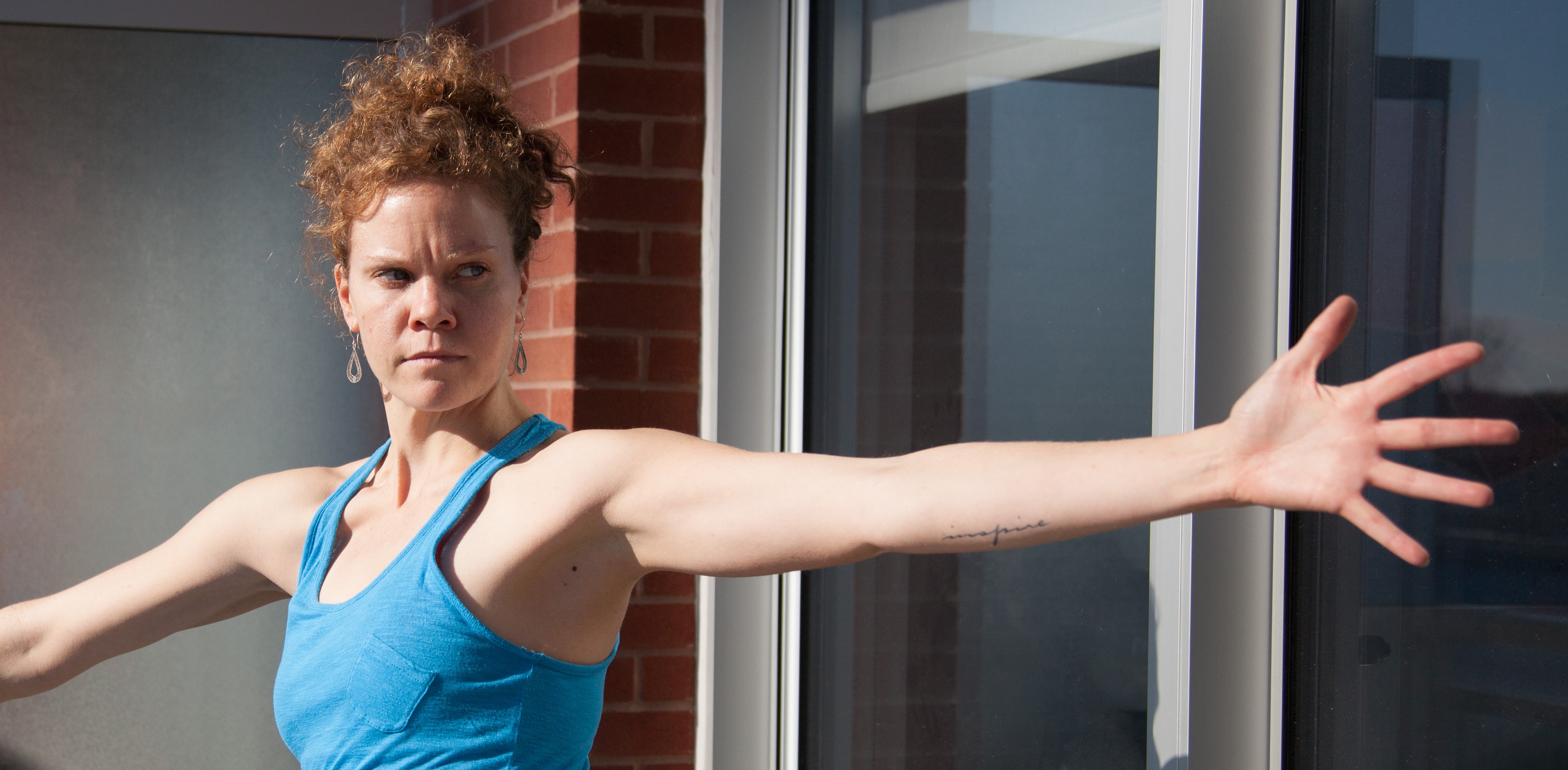
The story about my tattoo is that when I left the reserve, I was ready to give up on everything that I had worked toward so far. I came to question all of my beliefs about human resiliency and I wondered if it would ever be possible for anyone like those who lived in that community to overcome the kind of social barriers I had witnessed. I guess you could say that I completely lost my whole sense of self. In the end, that loss of sense of self gave me the ground work to build a new sense of self back up again. It forced me to recognize the importance of self-care and to understand the concept of putting the oxygen mask on your own face before assisting another. When I came back from the season of planting, I re-aligned myself with my what my values had always been. Youth work and social work were my passions and there was nothing other than the pursuit of the career I had begun that would allow me to grow from where I’d come. Like sticking a post-it to my forehead, I tattooed the word inspire on my arm.  That way, I didn’t have to look in the mirror for the reminder that this was my life’s mission: Always create inspiration, be inspiring, seek inspiration from others and when that’s lacking, change something. Whenever I lose myself, I have something very simple to come back to and the fact that it’s on my arm, visible to others, brings a sense of accountability along with the message I give to myself.

insipre.

“It is easier to fight for one’s principles than to live up to them” ~ Alfred Adler

058Start 2013 with one simple commitment of bringing change to a pattern that doesn’t contribute to a sense of wholeness and thriving for you. Be you. Rather than focusing on something that you want to do, accomplish, achieve, or succeed at, pay attention to a way of being you wish to practice so it eventually becomes an effortless character trait. Perhaps it’s a virtue that doesn’t express itself naturally but that resonates within you as a missing piece to your sense of wholeness. Inspirational, compassionate, funny, respectful of self and others, grounded, open, trusting, true… whatever word works for you. We often think in terms of have-do-be. If I had the job I wanted, I would do more with my free time, and I would be happier. It’s more often than not the other way around. If I be______________, I will do more of______________/ less of_______________, and I will have______________________. Sometimes, what you end up “having” comes back to the way you have been “being”.

“It is easier to fight for one’s principles than to live up to them.” That is such a powerful statement by psychologist and theorist, Alfred Adler. And so true. In my work, I share this quote with my clients all the time. There is often a paradox in the way we defend our moral beliefs and communicate what we value. The most common things I hear from young people I work with are along the lines of “He disrespected me, so I punched him”, “He bullied my friend, so gave him what he deserved”, “She humiliated me. She doesn’t deserve my respect”, “Anyone who judges me is a f*#% ________”. Unfortunately, when we go about resolving issues from a place of insecurity, power, ego, or fear, the result is that we communicate something that is contradictory to the principles we are supposedly fighting for. Blaming, projecting, judging, avoiding, and accusing others is easy. Living up to our principles is not. It requires an ability to create stillness in the patterns of the mind (yoga) and to live a life of integrity – having our actions be in line with our words, our words in line with our actions. Self-respect is my 2013 word.

Our defense mechanisms are unique to our own life story. What may have once worked for your survival as a young child may be in need of a serious update. For the start of this year, pick one new way of being you wish to cultivate – a principle you are committed to living up to – and practice it for 30 days. Be kind and non-judgmental toward yourself as you encounter bumps in the road throughout the process. Observe yourself in each of your interactions, reflect, be curious, and be mindful. Changing a pattern can occur in that amount of time if you place your attention on it and make tremendous effort. After 30 days, the practice continues, only it becomes more effortless. Every once in a while, the defenses will poke their head in again to say hi, but you’ll have a new way of being to come back to. The practice never ends. Your lifetime alone may not even be enough to fully integrate certain principles, but the effects of your way of being will impact all of those around you as well as the generations to come.

Happy 2013 – New beginnings, new endings, and new in-betweens.


Hmmm… Maybe some new spandex will make me a better yoga teacher!

001I’m not joking you, I have literally had this ridiculous thought before. Maybe I don’t use the word spandex. Not only has this idea crossed my mind, but I’ve gone to the extent of spending an hour in lululemon trying on a variety of yoga apparel at $80+ a piece, only to ditch everything in the change room and rush out of the store in a fluster as my thinking shifts to “what the hell am I doing? I already have tons of spandex!” (again, maybe I don’t use the word spandex… I just think it’s funny because that’s what they are: fancy, expensive spandex).

Brené Brown is a writer and research professor at the University of Houston – Graduate College of Social Work. She writes, researches and gives talks on wholehearted living and its relationship to topics such as authenticity, shame, vulnerability, and courage. I’m giving a silly example of my weird neurotic thoughts of purchasing something material to make me feel more worthy, competent, and credible as a yoga teacher, but trust me when I say I have much deeper examples that come down to the same idea of sacrificing my authenticity at times for the approval and acceptance of others. I think we all do it to some degree in our own ways.

The thing is, when we choose being liked over being real, we tend to feel small and depleted. Yoga pants (or whatever it is for you) have nothing to do with who we are – they may just make us look good… Spandexy pants certainly have nothing to do with how I teach yoga. Yet, the association is still there and fueled by our individualistic, consumerist culture. I know that and you know that. That’s why I rushed out in a total frenzy and gasped for air once I hit the pavement outside the store. It is in our nature to cling to this need to fit in at times in our life. I would like to distinguish fitting in, however, from the notion of belonging. Fitting in involves effort and is driven by a mistaken belief that belonging is about being liked. Belonging comes from feeling connected to ourselves and others on the sheer merit of being who we truly are – with all of our idiosyncracies intact. Belonging is a need. Trying to fit in only creeps up on us when that need for belonging is not being met (or when we perceive that the need is not being met).

In her book The Gifts of Imperfection: Letting Go of who You Think You are supposed to Be and Embracing who You Are, Brown jokes about how we should be born with a warning label that states “Caution: If you trade in your authenticity for safety, you may experience the following: anxiety, depression, eating disorders, addiction, rage, blame, resentment, and inexplicable grief”.

You can learn more about Brené’s work through her most recent Tedtalks:

http://www.ted.com/talks/brene_brown_listening_to_shame.html

Believing that we are whole and complete just the way we are takes tremendous courage. No one actually cares what spandex you wear.

Yoga and the Social Determinants of Health

005The World Health Organization defines the social determinants of health as “the conditions in which people are born, grow, live, work and age, including the health system”. The WHO attributes persisting health inequities – the unfair and avoidable differences in health status – to social conditions which are shaped by the distribution of money, power and resources. Health inequity is something that is very real in today’s existing systems on global, national, and local levels. Yoga, as we know it in our western culture, has become an amazing source of health promotion and well-being that is unfortunately not equally accessible by all. If we trace yoga back to its roots, we can make a strong distinction between Yoga and the Yoga Industry.

How do we overcome the barriers of health inequity? If we look at yoga as an example of a practice that demonstrates incredible holistic health benefits, how have we come to a place where it’s something that is mostly practiced by people who can afford it? Yoga studio owners are business people who need to keep the studio alive by setting competitive prices. Yoga teachers and therapists are professionals needing to earn a living. The disciplined self-practice of yoga takes a certain level of emotional stability and overall health. The reality is that there now exists a divide between those who participate in the westernized yoga world and those who don’t – or can’t. The divide is attributable to the same social determinants of health that are responsible for the inequities in any other of the systems that rely of the distribution of money, power, and resources.

Community yoga classes that run by suggested donation, teachers volunteering their time, and community agencies/schools finding the funds to offer free yoga programming are among some of the ways in which a sense of equity is being brought to the practice. At Adi Shesha Wellington West Studio in Ottawa, we offer a community yoga class at a 5$ suggested donation on Sunday afternoons. Teachers have been volunteering their time and a wonderful community is building around the initiative of making yoga more accessible for all. If you live in Ottawa, come out and practice with us. Wherever you live, work, practice, or teach, there are many opportunities to help break down these barriers. Thank you to all of you who volunteer your time and thank you to all who work toward making our health systems equitable. You’re amazing! (even if you only have thoughts of wanting to contribute).

For the Love of Dance

Find whatever it is that you love doing so much that when you are engaged in it, you lose all sense of time. One of those things for me is dancing.

After writing my last post, I felt a sense of emptiness. I thought of all the things I keep saying I want to do and don’t. Life works in funny ways. That evening, I found myself at an event put on by some friends and I was dancing again. I also signed up for a pottery course – something I’ve been saying I want to do for 3 years (Thanks Flowers).

What is it that makes you lose all sense of time? The Search Institute, one of the lead research organizations that focuses on discovering what kids need to succeed, refers to it as your “spark”. Martin E.P. Seligman, the leader in the positive psychology movement, talks about flow – being one with the music – a loss of self-consciousness while engaged in a particular activity.

We are all creative and inspiring beings at heart. I advocate for this perspective all the time in my work. There are so many people out there who haven’t had an opportunity to find a healthy experience of that loss of self-consciousness in a moment of total absorption in something that they truly love and are talented at. Yet, it’s such an essential part of each of our well-being and flourishing.

Always surround yourself with people who inspire you.