
What I love most about turning to the natural world to gain insight into our own human condition, is that it gifts us with some of the most beautiful metaphors.
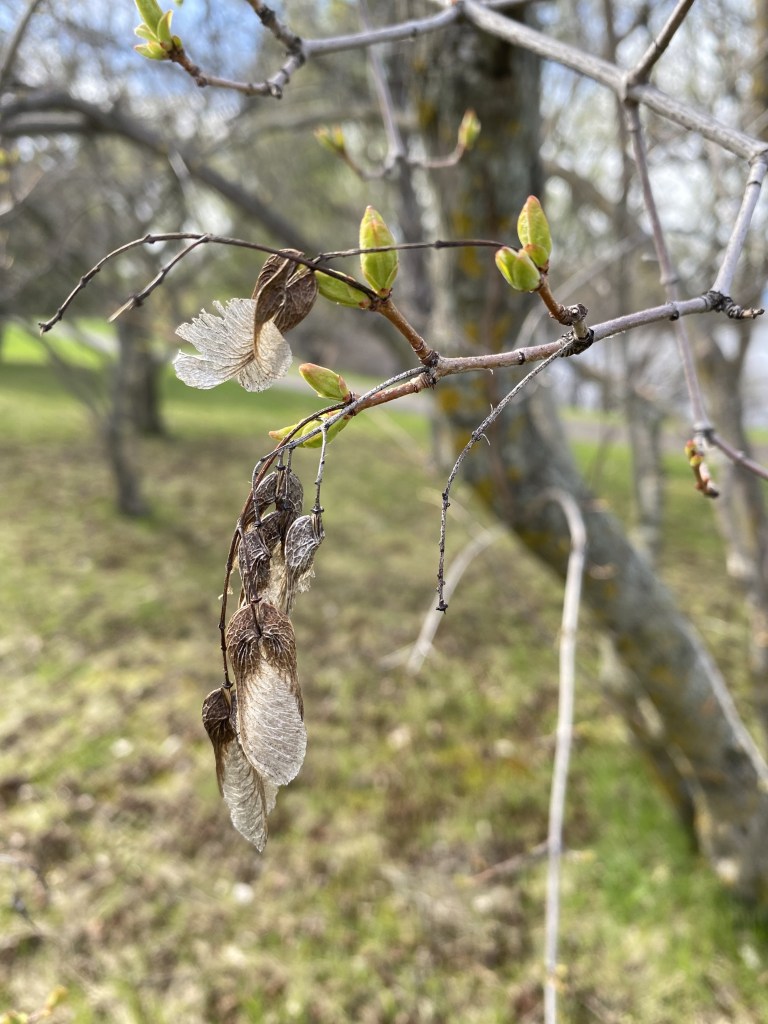
In the same way that last year’s dead seeds remain present on a tree while new growth simultaneously appears, parts of ourselves that are dying can be fading away while new parts emerge.
Only, if we aren’t paying attention closely enough, we may miss the subtlety of the overlap. And – it is indeed subtle, especially if you only consciously watch the lifecycle of something occasionally.
One of my absolute favourite and most beneficial acts of self-care is to go out into nature with a camera and seek out these metaphorical life lessons. I started doing this a few years ago after a major loss. Then, I couldn’t stop. I put my grief into action. I treated it like the verb that it is. I set out to understand life and death.
Whenever I do take a pause (mostly unintentionally or because life gets in the way), I notice the effects of it on my well-being immensely. So, I reset by simply venturing back out and re-becoming acquainted with the habit of it.
I took this picture above in May of this year. It was after one of these pauses from the habit of my nature studies. I was going through some big changes in my own life. Most of it marked by love and gratitude. But, like with any major transitions, I was taking on new roles, new responsibilities, finding a new sense of self and identity.
That also meant I needed to say goodbye to some of the old, to make space for all the new. So, grief and sorrow were involved. Just when I was in my brain fog over the losses, I literally walked right into the low hanging branch that you see. And it hit me – this is the way it is supposed to be. I’m meant to adapt slowly and naturally. Joy emerged within me.
All it took for me to snap out of my trance in that moment was seeing dead helicopters (as I called them as a kid) lingering around, having made it through the cold winter, as new branches and fresh green buds were gently taking their place on the same tree. There’s the knowing that the dead helicopters will fall off completely eventually. But, they aren’t rushed to do so. The new growth will get bigger and more abundant and take over and there will come a day when the tree just can’t support, nor will it need what has ended it’s lifecycle anymore. This year’s buds will become what the tree sheds next. Funny thing is, the tree won’t grieve. What’s happening is healthy. It’s necessary.
So, here’s what I have to offer: the best way, in my experience, to truly gain a deeper understanding of ourselves in states of transition and transformation is to study those very things in the way they show up in the natural world. Nature is a fabulous mirror. It reflects every part of our aliveness and our mortality back to us. It can uncover wonderful blindspots, open new perspectives, and answer questions about the mystery of our human condition.
But here’s the thing: it is most effective if you treat this as a deliberate and daily contemplative practice, and – if you set out on the same path each day, regardless of the weather. This way, you can track the changes. You can witness death and birth as they spiral around each other, on the same trees, along the same river, among the same wild foliages, and through all of the changing conditions of the environment within which these living entities move and thrive. Taking pictures, for me, simply gives me a creative tool through which I can look at what I’m seeing more closely, more intentionally. If walking isn’t possible for you, then choose a sit spot outside or by a window where you can observe your chosen anchor point daily.
Do this for a year. For a full cycle of the way the Earth turns. Not every day will come with ease, I promise you that. The ease comes over time as both your understanding and your capacity to be present through it all deepen.
 “Ignorance is bliss” is quite a common expression – mostly used in one of two contexts: 1) some use it to explain their own conscious choice of ignoring, as in not seeing something as it is in order to preserve a more ideal or optimistic perspective on the world; or 2) some use it to describe, often resentfully, how they feel negatively affected by another person’s choice to “burry their head in the sand” or to “turn a blind eye”, or to “push something under the rug”.
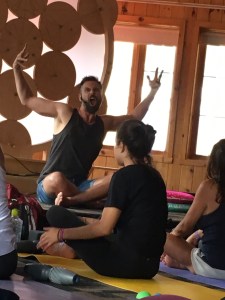 I hadn’t laughed that hard in so long. My belly hurt and coffee came up my nose. So animated was his story of irony – in this commercialized world of yoga festivals, where preachers bring together young souls in an era of spiritual deprivation. We suffer from our phones, social media, and ego-driven practices aimed at waking us up from what isolates us most. And so – I laughed that hard at my own judge: that part of me that knows the empowering feeling of thrusting my hips, chanting OM, in unison with house music, wearing tight pants –
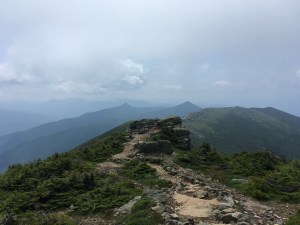 A year has shed its skin, yet again. The dark days have reached their darkest and are now gaining light each morning we wake. Some speak of resolutions. I prefer to set intentions.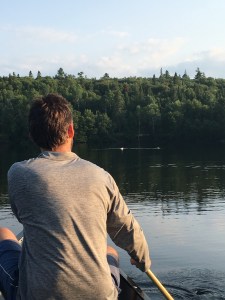
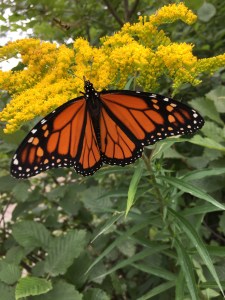 I offer this poem as it brought words to an understanding of what I needed from those around me with a recent loss I’ve encountered. It was the loss of someone whose love reminds me of the beauty, tenderness, and inspiration of the monarch butterfly. Perfectly, he took me strolling through a field of milkweeds on one of our first dates. I love you always. Thank you to Jan Falls, a dear friend and fellow therapist, who gifted me with this poem one morning last week – a morning when the loss struck me; when the abrupt truth of it met my disbelief and there were no words of condolences that felt right for anyone to speak other than to say “I don’t know what to say”.
 katherinemarr.com